
The Antarctic Dream
Chapter One

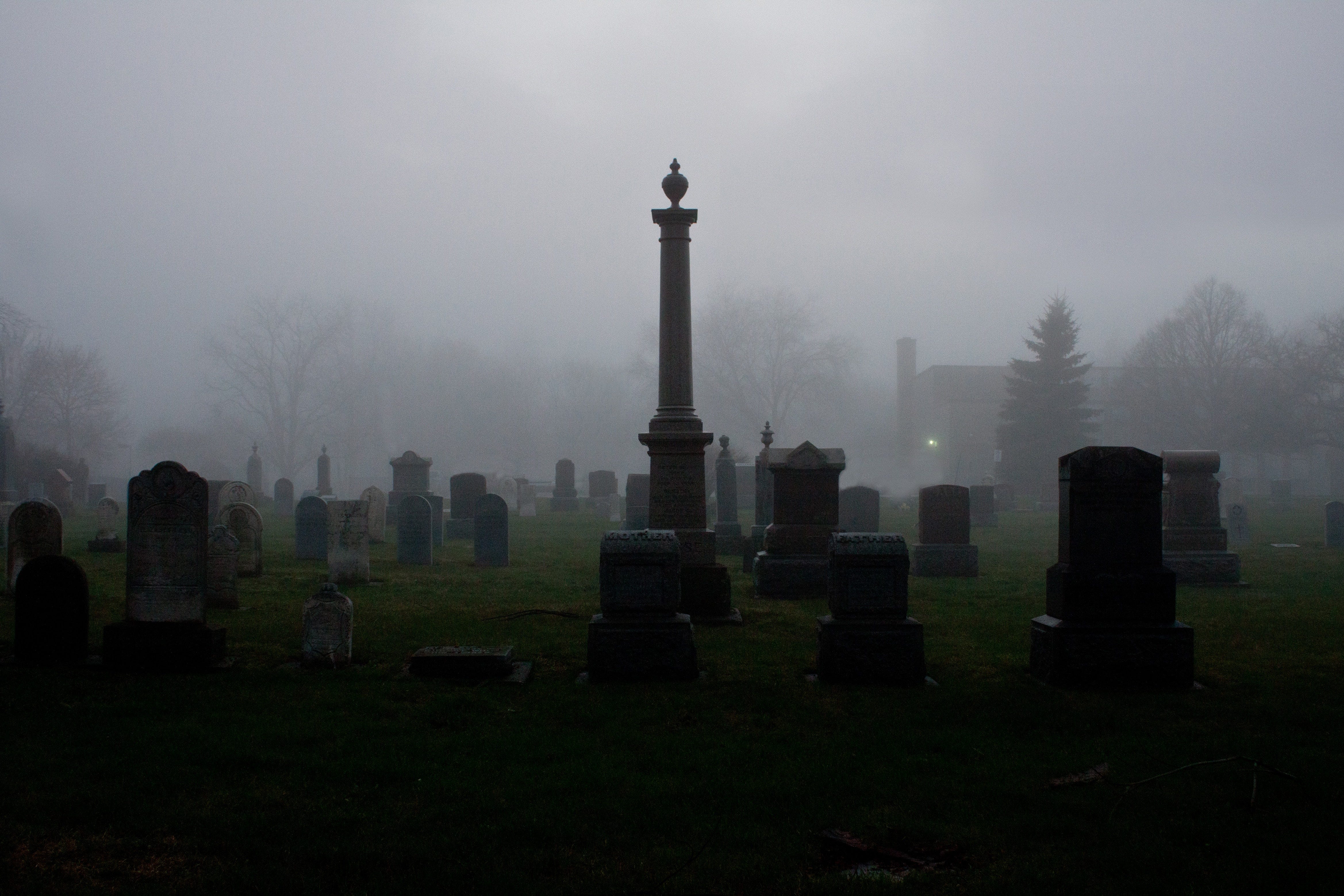
Photo by Scott Rodgerson
There’s an ocean beyond the sea
That holds an elixir for all who grieve.
Only the shipwrecked can ever find it—
In the ocean beyond the sea.
Before his father went missing in the war across the sea, Sylver used to run through the cemetery on the other side of the street. Touch a tombstone and you were toast. That was always the rule. Like the floor-boiled lava for other kids, a tombstone, like an iceberg, would sink you on the spot. He woke up to a bronze dawn creeping over the city, pressing his face to the window, and saw the smaller metropolis of gravestones and tombs, raggedy angels and crouching gargoyles—this was the boy’s daily escapade, his usual path. Rubbing his eyes, hearing his parents’ voices downstairs, admiring another heavy morning of blue, gold, and grit, he smiled to himself, smiled to the world, to the tombs that he would never touch. Sylver was just a boy, and death, of course, wasn’t real. It wouldn’t be real until his father left for the war across the sea. But touch a tombstone and you were a goner—it’s the law.
It was a dewy morning, smelling of mowed cemetery grass. Harry the Graveyard Man wiped his hands and lit a cigarette, leaning on a rake near the gate. The old loafers of the street were due in a few minutes on the street corner. Chill whiffs of wind pushed September out of the air, and October the 1st brought a hallowed sheen on the city buildings and tombs alike.
Sylver woke on blue mornings like this and saw Harry the Graveyard Man and the other old men smoking their cigarettes on the cemetery corner speaking of old memories, and smelled the car splashed walks from the window, the city of death stones stretching for a mile and a half, and he knew that death wasn’t real. How could it be? His mother hummed over the sink. His father laughed to himself at his desk. Mitt the cat rambled through the jungle of the living room searching for a purpose in life. The comfortable disarray of the Chronicles house told Sylver that though touching a tombstone meant dying, walking up the steps of their orange villa meant opening a warm door into life.
Yes, October grayly kneaded the street free of its summer shards. He, the king of this cemetery avenue, ready again for the public school on the other side, was sorry summer was gone but couldn’t help admiring the autumn presentation. Soon, trees would shed their gloves on the walks and decorate the graveyard with colored elegies. Old automobiles would splash sludge and rain from their pockets of broken road. Soon, snow would whip through in curtains and spurn the city with the north. The cemetery served as the quickest shortcut in the neighborhood. A kid could get to Brandy Candy through there, skip to Black’s Shoe Store, get fitted for some pants at Clary’s, and eat ice cream from Dairy Slam all on a morning like this one.
He didn’t like school much. His teachers were on his case about his algebra. He couldn’t catch a break. But today, October 1st, made up its own glory. His father chuckled, cursed over spilled coffee, and said something about being late for work. His mother said they were also late for morning Mass, and his father laughed again, and said something about how the Catholics were nothing if not punctual amassers, and Sylver wondered what they were talking about.
“Sylver!”
“Coming!”
“Breakfast! Now!” Turned out he was early, though for his mother there was no such thing as early—only late and almost late.
He rushed down the stairs, almost falling.
“Slow down!”
He arrived in the kitchen in second place, with gold medal winner Jesse Owens just a pace ahead of him and had to be caught by the round table where his father sat bunching up the newspaper.
“Whoa!” he said.
“Breakfast!” called his mother. She pushed a plate at him. Sausage, egg, and apple. The boy drank coffee too, and took it mid-whirl with the plate in one hand, endangering his meat links.
“What’s got you so riled?” said his father.
“Nothing!”
“You’re going to break your ever-loving back, sweetheart.”
“I know.”
He ate and his mother patted his shoulder and said, “Clean up when you’re done!” His father, a man with such gray eyes that looking into them meant looking into an ocean made of paper and ink all swirled together, leaned back in his chair, still late for work, to watch his son wolf down his breakfast of champions. Jesse Owens trotted in place by the door, refusing Hitler’s hand, eyes on the cemetery through the window.
Davy smiled a soft, easy-lipped smile, and said, “You taking the shortcut, son?”
“Yes sir!”
“You know the rule?”
“Touch a tombstone and you die!”
Davy laughed again and glanced at the paper as if making sure he understood what it said, that the headlines could be so discordant from the beauty of this moment, this truth. He tucked it under an arm, frowned, and shrugged to himself as Sylver gobbled the remnants of his breakfast and dashed the saucer to the sink. The yard in the back flushed with morning light, igniting the birches and the big oak tree in the corner of the yard. It was time to race. He scrubbed and dried the plate and flew to get the backpack from its metal hook by the door.
“Lunch!”
His mother ran the pail to him and swatted him on the rear. “Coat!” His father grinned at him from the kitchen, coffee plumes swirling up into his face.
“Time for school. Be safe!”
“Run for your life,” called his father as Sylver flung the door wide open, leg out into the concrete patio, tasting the morning in his nose. “Miss those icebergs!”
And off he went. He sped under the graveyard’s stone archway, ran past the castle-like tombs of dead millionaires, and
hurtled over the flat faces barely surviving the weeds, scripted with nothing more than a name and a date.
He ran through fathers and daughters, mothers and brothers, over old men and children. He caterwauled through centuries and nameless ghosts. He flew through beloved memory. The skyscrapers ahead practiced their own tombstone grimaces in the sunlight, gloried angles getting full of people who believed, like Sylver, that death wasn’t real.
He tossed a glance behind his shoulder. His mother and father stood in the doorway waving.
“Fly! Fly! Fly!” Davy cried. “Starboard! Steer left! Iceberg ahead! Remember, they go WAY, WAY into the ground…
Harry the Graveyard Man, or so folks knew him on Haven Avenue, cocked his head behind a black elm in the cemetery that morning to watch the boy fly. He grinned and whistled and said, “My my my how that boy can run!”
I’m very intrigued about the tombstone’s importance. I like it. Perhaps you overused it. But I liked it.
I’m also intrigued by the boy not fearing death. I understand this to either be some mythical thing or perhaps he’s a boy whose character defect is not taking death seriously. Perhaps play that out more. It’s interesting to me.
I got a bit lost at the beginning. It went from graveyard to the protagonist to descriptions and more descriptions of things I didn’t really care about. I wonder if the protagonist could start in the cemetery rather than in his bed. Give me some action on page one, maybe.
Perhaps use fewer adjectives. The creeping dawn is interesting. “Bronze” just muddled it. It’s cool the dad has eyes like he does, but I don’t see how that makes the protagonist feel, how it impacts the boy.
Running through the graveyard was poetic and moving. It made me think of ways in which I run through life with all the dead things around me.
Overall, interesting. I’d keep reading. But I really only want to learn of this boy and not all the other characters unless they are immediately making an impact on him and driving the plot.
I want to know what the boy wants, and identify with him. I’m not saying you need this in the first chapter but is an idea for going forward.
Note: I have next to no writing expertise and just recently started following you on Twitter and so don’t have any context. I wish you well in this project!